
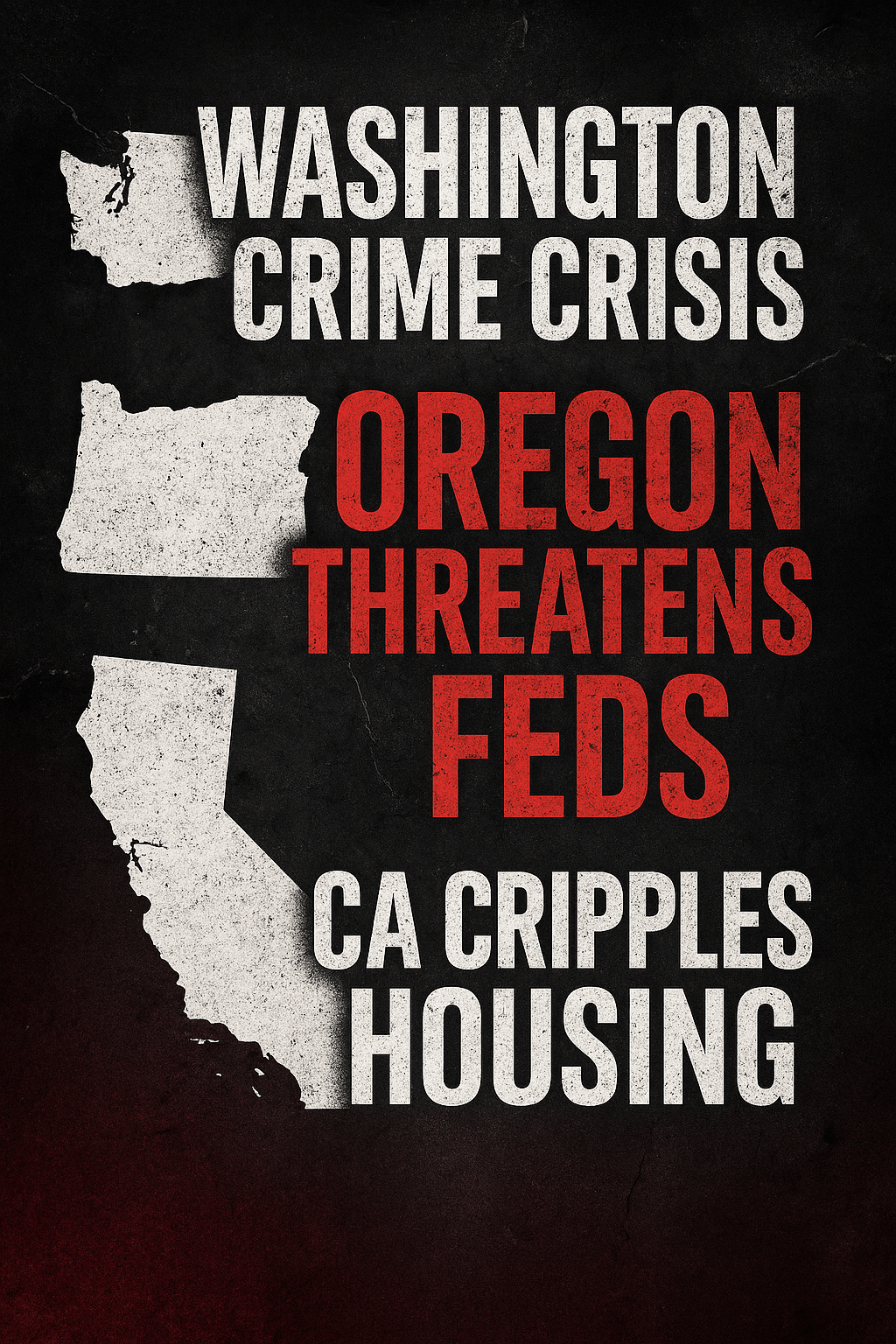
The West Coast continues its downward spiral:
• Washington lets a violent repeat offender walk with another plea deal.
• Oregon threatens to prosecute federal agents while ignoring its own crime problem.
• California doubles down on rent control — a policy proven to destroy housing markets.
This is what happens when ideology runs the show instead of common sense.
Left Coast News will keep calling it out. 🇺🇸
#LeftCoastNews #WestCoastCrisis #HoldTheLine #PatriotVoice
#BlueStateChaos #BreakingNews #WakeUpAmerica #ConservativeNews
#LibsFailingBigTime #CrimeCrisis #GovernmentOverreach #TaxHikes
#HousingCrisis #ProtectOurCommunities
Read About It
Left Coast News — Regional Report: Crime, Federal Tension, and Housing Turmoil Across the West Coast
By Left Coast News Staff
Date: 12/10/2025
The West Coast saw a series of significant developments this week involving criminal justice decisions in Washington, escalating tensions between Oregon officials and federal agents, and a major housing policy shift in California. Together, the stories highlight the widening divide between state-level leadership and public safety concerns across the region.
—
WASHINGTON: Repeat Violent Offender Receives New Plea Deal
A Washington man with a long history of violent criminal behavior is once again at the center of controversy after securing a plea agreement in a new felony case.
Court documents show that Abdinjib Ibraham — previously connected to incidents involving carjacking, pistol-whipping, threats, and repeated confrontations with law enforcement — received a reduced sentence after allegedly threatening to kill a corrections officer. The deal comes despite a documented pattern of violence and multiple stints at Western State Hospital, where he was previously ordered for competency restoration.
Critics argue that the decision reflects a growing trend within Washington’s justice system, where chronic offenders cycle between jail, psychiatric treatment, and the community with limited long-term accountability. Law-enforcement officials warn that such outcomes place additional strain on officers and undermine public safety.
“We continue to see dangerous individuals return to the streets despite lengthy histories of violent conduct,” one official said. “At some point the system has to prioritize the safety of victims and the public.”
—
OREGON: State Leaders Warn Federal Agents Over Use of Force
In Oregon, state officials issued a rare and forceful warning to federal law-enforcement agencies, accusing them of using excessive force during recent arrest operations.
Attorney General Dan Rayfield, supported by district attorneys from Multnomah, Washington, and Marion counties, sent a joint letter outlining a series of allegations against federal task-force officers. The claims include aggressive detentions, force used against nonviolent suspects, and incidents involving minors held at gunpoint.
The letter states that if such actions continue, federal agents could face criminal investigation or prosecution under Oregon law. The declaration marks one of the most direct challenges the state has issued to federal agencies in recent years.
Observers note that Oregon has a long, complicated history with federal law enforcement, particularly since the civil unrest of 2020. State officials say their warning is intended to reinforce boundaries and ensure accountability. Federal agencies have not yet publicly responded.
The move has generated debate among legal analysts and community members. Supporters argue that no agency should operate without oversight; critics say the state has shown less urgency when addressing local crime and repeat offenses within its own jurisdictions.
—
CALIFORNIA: Los Angeles Passes New Limits on Rent Increases
In California, the Los Angeles City Council approved a significant expansion of rent-control restrictions that will affect the vast majority of rental units within city limits.
Under the new rules, annual rent increases for rent-stabilized units will be capped between 1 percent and 4 percent, tied to inflation and substantially lower than the former limits, which reached up to 8 percent in some conditions. The change impacts an estimated 650,000 rental units, representing nearly three-quarters of the city’s rental housing stock.
City officials say the measure is intended to protect tenants from rising costs and displacement. Landlord groups, however, warn that the tightened restrictions will reduce investment, accelerate property conversions, and deepen the city’s already severe housing shortage.
Economists noted that while rent control may offer short-term stability to existing tenants, it has historically led to reduced housing supply, higher overall market rents, and deteriorating building conditions in cities where such policies were expanded.
Los Angeles now joins other major metropolitan areas — including San Francisco and New York — that have strengthened rent-control measures despite longstanding concerns about long-term economic effects.
—
A Region in Transition
Together, the developments in Washington, Oregon, and California underscore the complex policy landscape of the West Coast, where debates over public safety, housing, law-enforcement authority, and economic stability are intensifying.
From controversial plea agreements to state-federal tensions and sweeping housing reforms, each state continues to chart its own path — with significant implications for residents and communities across the region.
 Behind The Line Podcast
Leave a comment