
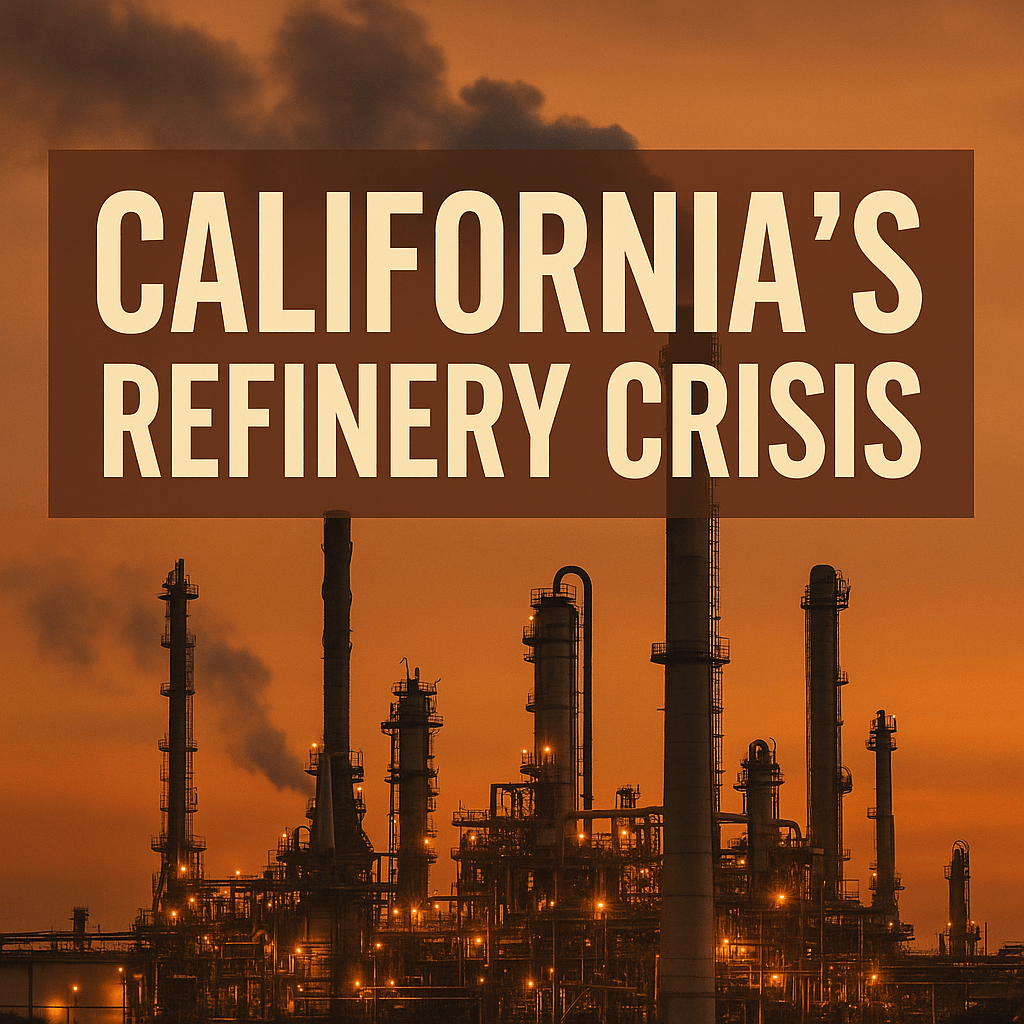
California Scrambles to Save Valero Refinery as Closure Threatens Jobs, Fuel Supply, and Local Economies
BENICIA, Calif. — California officials are taking the unusual step of trying to find a buyer for Valero Energy’s Benicia oil refinery as the company moves forward with plans to shut the facility down next year, a decision that could ripple through fuel markets, local governments, and nonprofit organizations across Northern California.
Valero, one of the nation’s largest refiners, announced earlier this year that it intends to cease operations at the Benicia refinery by April 2026, citing mounting regulatory costs, environmental compliance requirements, and an increasingly uncertain business environment in California. The company recorded approximately $1.1 billion in impairment charges related to its California refining operations, signaling a significant financial retreat from the state.
The Benicia refinery processes roughly 145,000 barrels of crude oil per day, accounting for nearly 9% of California’s total refining capacity. Its closure would further shrink an already constrained fuel supply system in a state that is heavily dependent on in-state refining due to unique fuel blend requirements.
State Intervention in a Private Market
In response, the California Energy Commission has reportedly begun quietly exploring options to keep the refinery operating, including outreach to potential buyers — a rare move for a state government that has aggressively pursued policies aimed at reducing fossil fuel use.
At the same time, lawmakers have discussed potential financial assistance packages to help offset operational costs or environmental upgrades, with estimates ranging into the tens or even hundreds of millions of dollars. Critics argue that such proposals amount to a taxpayer-funded bailout of an industry the state has simultaneously worked to regulate out of existence.
Supporters of intervention counter that the closure would destabilize fuel markets, raise gasoline prices, and harm working-class Californians who already pay some of the highest fuel costs in the country.
Jobs and Community Impact
The refinery directly employs hundreds of workers in skilled, high-wage positions, many of whom live in Solano County and surrounding areas. The loss of those jobs would be a significant blow to the regional economy.
Beyond employment, the refinery has been a major source of revenue for the city of Benicia, contributing millions of dollars annually in taxes and fees. City officials have warned that losing the facility could force cuts to public services, including police, fire protection, and infrastructure maintenance.
Local nonprofit organizations are also bracing for impact. Over the past two decades, Valero has donated tens of millions of dollars to community groups, food banks, education programs, and social service organizations throughout the region. Nonprofit leaders say replacing that level of private support will be difficult, particularly as government funding tightens.
Fuel Prices and Energy Reliability
Energy analysts warn that the refinery’s closure could further strain California’s fuel supply, increasing reliance on imported gasoline and refined products. With fewer refineries operating in the state, unexpected outages or supply disruptions could lead to sharper price spikes at the pump.
California already enforces some of the strictest fuel standards in the country, limiting the ability to quickly import replacement supplies from other states. Industry experts say that makes the loss of any major refinery particularly consequential.
A Broader Policy Debate
The Valero situation highlights a growing tension in California’s energy strategy. While state leaders continue to push aggressive climate and emissions goals — including bans on new gas-powered vehicle sales in the coming decade — the state remains heavily dependent on petroleum for transportation, goods movement, and emergency services.
Critics argue that policymakers have focused on long-term environmental targets without adequately planning for the economic and infrastructure consequences of driving existing energy producers out of the state. Supporters of California’s approach maintain that the transition away from fossil fuels is necessary and inevitable, even if it comes with short-term disruption.
For now, the future of the Benicia refinery remains uncertain. Whether a buyer emerges or the state steps in with financial incentives, the outcome will serve as a test case for how California balances its environmental ambitions with economic reality.
As one longtime refinery worker put it, “Everyone wants clean energy — but nobody seems to have a plan for what happens in the meantime.”
#LeftCoastNews #CaliforniaEnergy #Valero #BeniciaRefinery #EnergyExodus #GasPrices #CaliforniaEconomy #FuelSupply #EnergyPolicy #RegulatoryOverreach #OilAndGas #WorkingClass #BayAreaNews #CaliforniaPolitics #EnergyCrisis
 Behind The Line Podcast
Leave a comment