West Coast Tax and Policy Shifts Spark Debate Ahead of 2026
By Left Coast News
A series of new laws and policy decisions across Washington, California, and Oregon are intensifying debate over taxation, government authority, and voter consent as the West Coast moves toward 2026.
From sweeping tax changes approved by narrow margins in Olympia, to a reparations framework authorized in San Francisco, to voter-driven resistance against tax hikes in Oregon, the developments highlight sharply different approaches to governance — and rising public concern over affordability and constitutional limits.
Washington Expands Taxes Under ESSB 5814 and Related Laws
Lawmakers in Washington State approved a package of tax changes during the 2025 legislative session that begin taking effect in 2026, including one of the highest nicotine excise taxes in the nation.
At the center of the tax expansion is Engrossed Substitute Senate Bill 5814 (ESSB 5814), titled “Modifying the application and administration of certain excise taxes.” The bill significantly expands the state’s excise and retail tax base.
ESSB 5814 – Final Legislative Votes
Washington Senate: Passed 27–22
Washington House: Passed 50–47 (after amendment)
Senate concurrence: 26–22
Effective dates: October 1, 2025, and January 1, 2026 (tax provisions)
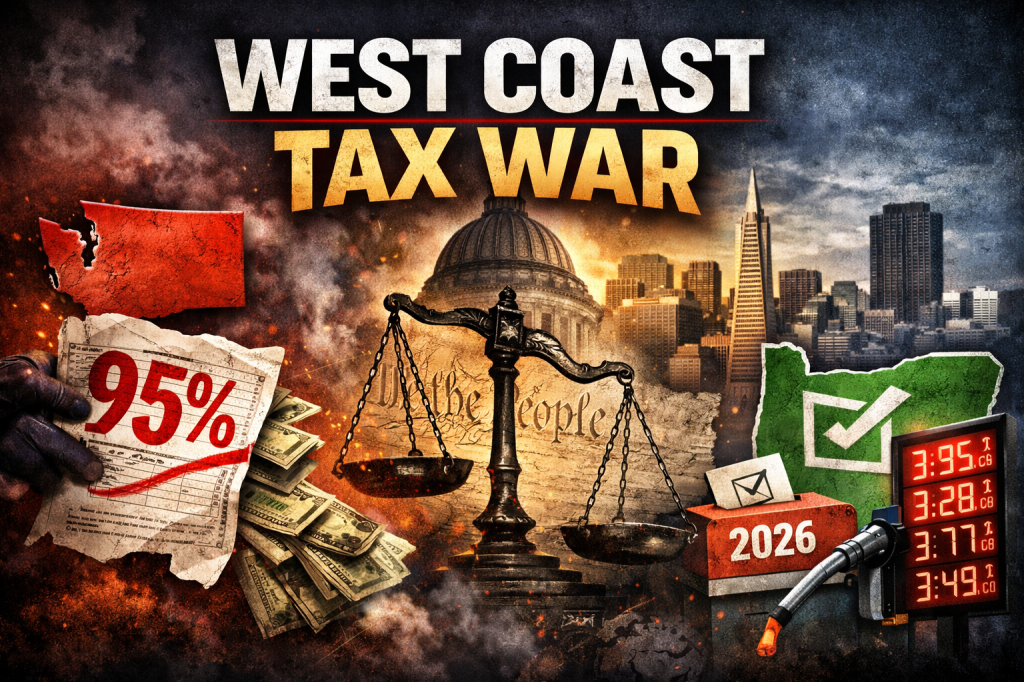
Under ESSB 5814, Washington expanded the definition of taxable tobacco products to include all nicotine-containing products, whether derived from tobacco or created synthetically. These products are now subject to a 95% excise tax on the taxable sales price.
Notably, traditional cigarettes remain excluded from this expanded nicotine definition and continue to be taxed under a separate cigarette tax statute — a distinction that has drawn criticism from both retailers and policy analysts.
In addition to the nicotine tax, ESSB 5814 and companion legislation broaden retail sales tax and Business & Occupation (B&O) tax coverage to include a wide range of services that were previously exempt or taxed at lower classifications. Newly taxed or reclassified services include:
Advertising and digital advertising services
Digital automated services
IT training, technical support, and custom software services
Security, monitoring, and armored car services
Custom website development
Supporters argue the changes modernize the tax code for a service-based economy. Opponents warn the measures effectively function as a tax increase on small businesses and consumers, with costs passed down through higher prices.
San Francisco Authorizes Reparations Framework by Ordinance
In California, the mayor of San Francisco signed a city ordinance in late December 2025 authorizing a legal and administrative framework for a reparations program for Black residents.
The ordinance was previously approved by the San Francisco Board of Supervisors before being signed by the mayor. The measure does not appropriate funding and does not authorize immediate payments. Any future financial distributions would require additional legislation and a dedicated funding source.
City officials described the action as procedural, emphasizing that no taxpayer funds have yet been committed. The ordinance follows recommendations from a city advisory committee that previously proposed reparations payments potentially reaching millions of dollars per eligible individual — figures city leaders have acknowledged are currently unfunded and incompatible with existing budget constraints.
Critics argue the framework raises constitutional questions by establishing race-based eligibility criteria and creating expectations without identified funding, particularly as San Francisco faces a substantial budget deficit and ongoing public safety challenges.
Oregon Tax Increases Forced Onto 2026 Ballot
In Oregon, a separate battle over taxation is unfolding — this time driven directly by voters.
During the 2025 legislative session, Oregon lawmakers approved a transportation funding package that included:
Gas tax increases
Payroll tax increases
Higher vehicle registration fees
Increased vehicle title and transfer fees
Although the legislation passed the legislature, citizen groups successfully gathered enough signatures to trigger a statewide referendum, blocking the tax increases from taking effect immediately.
Because of the referendum, the tax package will now be decided by voters in 2026, rather than being implemented automatically. As a result, no final vote count applies yet, as the outcome will depend on the statewide ballot.
Supporters of the taxes argue the increases are necessary to fund infrastructure maintenance. Opponents say the referral represents a critical check on legislative authority and a demand for voter consent on major tax increases.
A Regional Debate Over Taxation and Authority
Taken together, the developments illustrate a broader debate across the West Coast over how far governments can go in expanding taxation without direct voter approval.
In Washington, major tax expansions passed by narrow legislative margins. In California, a reparations framework moved forward without funding but with long-term fiscal implications. In Oregon, voters intervened to halt tax increases until a statewide vote could occur.
As multiple measures take effect — and others head to the ballot — the region appears headed for a renewed confrontation over taxation, affordability, and the constitutional limits of government authority heading into 2026.
WA Prefiled Bills: https://app.leg.wa.gov/billinfo/prefiled
WA Bills Mentioned in this Report:
https://app.leg.wa.gov/billsummary?BillNumber=2068&Year=2025&Initiative=false
https://app.leg.wa.gov/billsummary?BillNumber=5814&Year=2025
OR Legislature:
https://www.oregonlegislature.gov/
CA Legislature:
https://www.leginfo.legislature.ca.gov/faces/home.xhtml
Leftcoastnews.net
WestCoastTaxWar #WashingtonTaxes #95PercentTax #NicotineTax #ServiceTax #BOTax #CaliforniaReparations #SanFranciscoPolitics #OregonGasTax #PayrollTax #TaxpayerRevolt #GovernmentOverreach #ConstitutionMatters #LeftCoastNews #PoliticalPodcast #ConservativeNews
 Behind The Line Podcast
Leave a comment