

OLYMPIA — Washington State’s normally low-profile judicial races have transformed into an unprecedented, high-stakes political battleground this election cycle, as conservative organizers and frustrated voters launch a coordinated effort to fundamentally alter the direction of the state’s highest court.
With five of the nine seats on the Washington State Supreme Court up for grabs, conservative legal advocates are warning that a failure to mobilize could hand progressives an unchecked legal monopoly—leaving no judicial buffer against a potential Democrat supermajority in the state legislature.
The Nonpartisan Illusion
While judicial races in Washington are officially nonpartisan and candidates appear on the ballot without party labels, the ideological battle lines behind the scenes have never been more explicitly drawn. Over the weekend, the progressive establishment openly signaled the immense weight of these races, emphasizing to supporters the critical importance of maintaining a progressive majority to protect recent legislative victories.
For years, conservative critics have argued that the current high court has operated less like a neutral arbiter of the law and more like a “super-legislature,” pointing to controversial rulings that upheld the state’s capital gains tax and altered criminal justice enforcement.
The concern now extends beyond the court itself. If progressive lawmakers secure a two-thirds supermajority in Olympia, they would possess the power to pass emergency clauses that bypass voter referendums and completely override gubernatorial vetoes. Without a balanced judiciary to enforce strict constitutional limits, conservative advocates argue that the final systemic guardrail in Washington state government would be completely dismantled.
Changing the Court’s Philosophy
The push from the right centers on introducing strict “judicial restraint” and “textualism”—the philosophy that judges should interpret laws exactly as they are written, rather than interpreting them to fit modern political goals.
Four candidates have emerged with formal recommendations and strong backing from the state’s conservative coalition, aiming to challenge the current bench’s status quo:
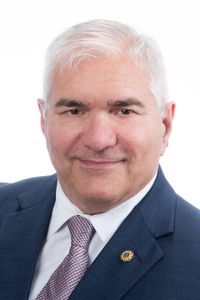
Dave Larson (Position 5): The recently retired Federal Way Municipal Court Judge is a familiar face to statewide voters. Larson is running for the open seat vacated by retiring Justice Barbara Madsen. A staunch critic of judicial overreach, Larson argues that recent high court decisions have undermined public safety and stripped authority away from local trial courts. He faces appointed incumbent Theo Angelis in a four-way primary.
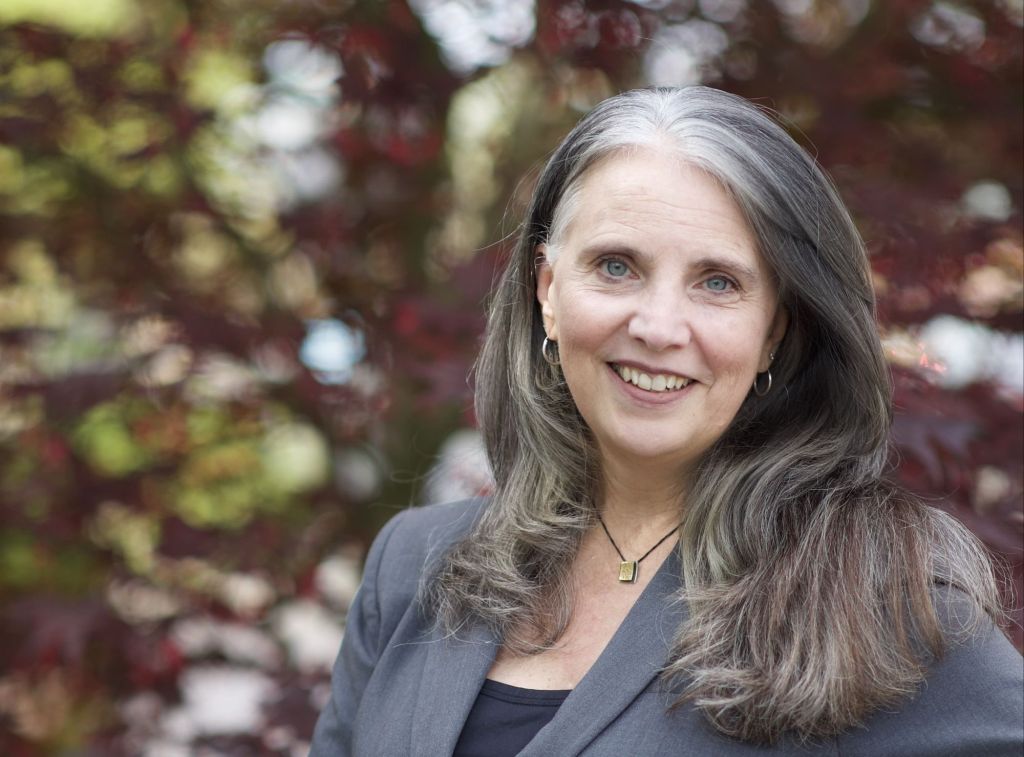
**Laura Christensen Colberg (Position 1): A veteran family law attorney and Snohomish County Superior Court pro tem commissioner, Colberg is mounting a direct challenge to incumbent Justice Colleen Melody—who was appointed by Governor Bob Ferguson earlier this year. Colberg’s campaign centers on true independence, reminding voters that she enters the race free of political debts to the executive branch in Olympia.

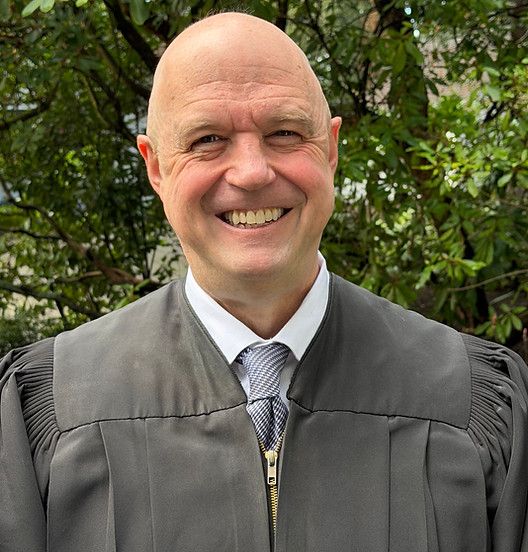
David Stevens (Position 3): Currently a Superior Court Judge in Mason County, Stevens is running for the open seat left by the retirement of Justice Raquel Montoya-Lewis. Backed heavily by conservative groups seeking to bring geographic and philosophical “diversity of thought” to a bench historically dominated by the Seattle-area legal establishment, Stevens faces a competitive three-way primary.

**Todd Bloom (Position 7): A tax attorney and U.S. Navy veteran, Bloom is stepping up to challenge long-time incumbent Chief Justice Debra Stephens. Bloom, who has a background in constitutional law and previous experience running for public office, is centering his platform on restoring a rigid separation of powers between the judiciary and the legislature.
A Choice of Institutional Style
The fifth race on the ballot—Position 4, an open seat created by the retirement of Justice Charles W. Johnson—presents a different dynamic. Because only two candidates filed for the seat, their August primary was automatically canceled, sending both straight to the November general election ballot without a formal recommendation from the state Republican Party.
Voters in Position 4 will choose between Ian Birk, a Court of Appeals judge heavily aligned with the traditional progressive establishment, and Sean O’Donnell, a King County Superior Court judge and former senior prosecutor whose platform centers on public safety and victim advocacy, drawing broad cross-spectrum support from moderate Democrats, the Washington Council of Police and Sheriffs, the Washington Farm Bureau, and the Washington Retail Association. His platform emphasizes public safety, victim advocacy, and mental health diversion courts.
Turnout Dictates the Outcome
Historically, drop-off on the ballot for judicial races is exceptionally high, particularly among conservative voters who skip nonpartisan lines out of frustration or a lack of candidate awareness. Organizers are blanketing the state with a unified message: the top of the ticket is only half the battle.
With the statewide primary election scheduled for August 4, 2026, and the general election following on November 3, 2026, the message from the campaign trail is clear. If voters want a voice for constitutional sanity and public safety in Washington State, they must scroll all the way down the ballot to stop the supermajority and balance the bench.
#WashingtonState #WASupremeCourt #LeftCoastNews #WAPolitics #Olympia #WAleg #WashingtonPolitics #PacificNorthwest #Conservative #SaveOurState #VoteWashington #JudicialRestraint #StopTheSupermajority #BalanceTheBench #VoterTurnout #ConstitutionalOriginalism
 Behind The Line Podcast
Leave a comment